What is the best way to use treats for pet training? The answer begins with timing, clarity, and restraint. A treat should mark the exact behavior you want repeated, such as four paws on the floor or a calm pause beside your chair. It should not become a bribe waved through every exercise. Animal behaviorist and clicker-training pioneer Karen Pryor explains, “Reinforcement is anything that increases the likelihood that a behavior will occur again.” That principle gives owners a practical foundation for how to use treats for pet training effectively.
A small, soft treat works best because pets can eat it quickly and return to learning. Break larger treats into pea-sized pieces, especially during five-minute sessions. Deliver the reward immediately after the desired action. Then reduce food rewards slowly as the behavior becomes reliable, replacing some treats with praise, play, or access to a favorite toy. Keep a simple record of progress. Did your dog respond three times, or only once? Did your cat leave the counter because of the reward, or because the environment changed?
Mistakes happen.
Even experienced handlers may reward a jump, a paw swipe, or a delayed response. I have found that slower timing can confuse both learner and teacher. Treats also count toward daily calories, so portion control matters. Pets with allergies, diabetes, or medical diets need veterinary guidance before training plans change. This introduction will examine practical methods, common errors, and humane ways to build dependable behavior without creating constant food dependence.
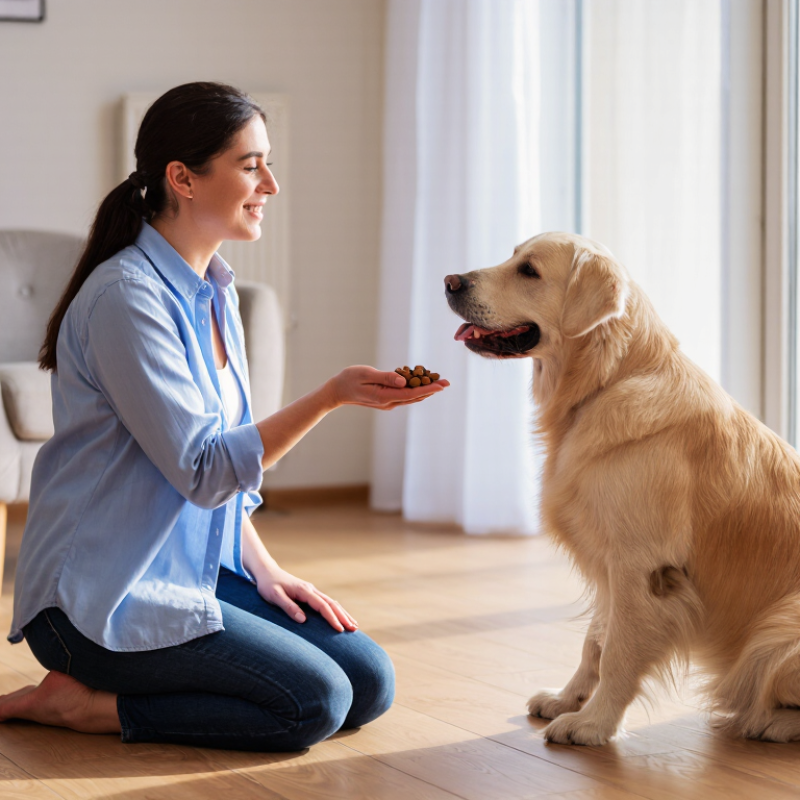
What Is the Best Way to Use Treats for Pet Training?
Choosing the Right Treats for Effective Pet Training
Effective training starts with the treat, not the command. Choose soft, pea-sized pieces that your pet can swallow quickly. Small is powerful. A treat should motivate without interrupting focus. For dogs, moist pieces often work well outdoors. For cats, strong-smelling options may attract attention better. Always check the ingredient list for known sensitivities, especially if your pet has digestive problems.
Calories matter more than many owners expect. The Association for Pet Obesity Prevention’s 2022 survey estimated that 53% of dogs and 59% of cats were overweight or obese. These figures are survey estimates, not a diagnosis for every animal. Still, they show why rewards need careful planning. Veterinary nutrition guidance commonly recommends keeping treats below 10% of daily calories. Break larger treats into several rewards, and reduce the regular meal slightly when training intensively.
Use the treat immediately after the desired behavior. Timing teaches faster than quantity. Reserve higher-value treats for distractions, new environments, or difficult skills. Use ordinary rewards for familiar commands. I still misjudge sometimes. My pet may ignore a treat outside but accept it at home. That is useful feedback, not failure. Change the texture, smell, distance, or training location before blaming the animal. Keep a simple daily note of treats, meals, and behavior. According to the American Pet Products Association’s 2023–2024 National Pet Owners Survey, 66% of U.S. households own a pet, so practical, sustainable routines matter for many families.
| Training Consideration | Recommended Treat Characteristics | Practical Portion | Best Timing | Suggested Use | Important Safety or Nutrition Note |
|---|---|---|---|---|---|
| Basic obedience | Small, soft treats that can be eaten quickly without distracting the pet | About pea-sized for many dogs; use smaller pieces for small pets | Immediately after the desired behavior, ideally within a few seconds | Reward behaviors such as sitting, staying, coming when called, and walking calmly | Fast consumption helps maintain attention and allows several repetitions during one session |
| High-distraction environments | More appealing treats with a noticeable aroma and a texture the pet enjoys | Use tiny pieces so the reward remains valuable without adding excessive calories | Deliver the treat as soon as the pet responds correctly despite distractions | Use outdoors, near other animals, or in unfamiliar places | Begin training in a quiet setting before increasing distractions gradually |
| Long training sessions | Low-calorie treats or part of the pet’s regular complete food | Pre-measure the day’s training portion before starting | Reward frequently at the beginning, then reduce the rate as the behavior improves | Practice skills that require many repetitions | Treats and other extras should generally provide no more than about 10% of daily calories |
| Shaping a new behavior | Very small, soft, high-value pieces that can be given repeatedly | One small piece for each successful step or approximation | Reward each correct step at first, then gradually expect more before rewarding | Teach complex actions by reinforcing small improvements | Clear timing is more important than using a large treat |
| Recall training | Highly desirable treats reserved for coming when called | Several small pieces may be used as a single reward | Reward immediately when the pet reaches the handler | Build a positive association with returning to the handler | Do not punish the pet after a delayed return, as this can weaken recall |
| Calm behavior | Tiny, low-crumb treats that do not encourage jumping or frantic behavior | One piece after a short period of calm, gradually extending the interval | Give the reward while the pet is quiet and relaxed | Reinforce lying on a mat, waiting politely, or remaining calm around visitors | Avoid rewarding barking, pawing, or jumping by offering food during those behaviors |
| Weight management | Low-calorie treats, finely divided pieces, or measured portions of regular food | Reduce meal portions only under a veterinarian’s guidance when appropriate | Distribute the planned treat allowance throughout the day | Continue positive training while controlling total calorie intake | Monitor body condition and weight; calorie needs vary by age, size, activity, and health |
| Pets with dietary sensitivities | Simple treats containing ingredients that fit the pet’s established diet | Use the smallest effective amount | Introduce only one new treat at a time | Train without triggering known food sensitivities | Check ingredient labels and ask a veterinarian before changing treats for a pet with allergies or medical conditions |
| Dental considerations | Appropriately sized treats that are not excessively hard or likely to splinter | Follow the serving guidance and supervise chewing | Use as an occasional reward rather than the main training treat | Offer variety when a crunchy reward is useful | Treats do not replace regular tooth brushing or professional dental care |
| Fading treat dependence | The same small treats initially, followed by praise, play, or access to preferred activities | Gradually reduce treat frequency rather than stopping abruptly | Move from rewarding every correct response to rewarding unpredictably once reliable | Maintain learned behaviors in everyday situations | Continue occasional rewards so the behavior remains worthwhile and consistent |
General guidance: Choose treats appropriate for the pet’s species, age, size, health, and dietary needs. Always supervise feeding and provide fresh water.
Choose soft, pea-sized pieces that your pet can swallow quickly. Small pieces preserve focus. Dogs may prefer moist treats outdoors. Cats often respond better to strong smells.
Keep treats below about 10% of daily calories. Reduce regular food slightly during intensive training. Overweight pets need especially careful portions.
Give the treat immediately after the desired behavior. Fast timing connects the action with the reward. Delayed rewards can confuse the lesson.
Use ordinary pieces for familiar commands. Save higher-value treats for distractions, new places, or difficult skills. Keep the reward meaningful.
Measure treats before calling your pet. Place a small portion in a shallow container. A full packet encourages accidental overfeeding. Count the pieces.
Read the ingredient list for known sensitivities. Check freshness and keep treats away from heat and moisture. Ask a veterinarian about allergies or special diets.
Try a different texture, smell, distance, or location. Outdoor distractions may overpower familiar rewards. I still misjudge sometimes. That is useful feedback.
Prepare rewards in advance and pause when excitement becomes frantic. Watch body language closely. Shorter sessions may work better. Clear routines help both of you.
Effective pet training begins with choosing small, healthy, appealing treats that your pet can eat safely and easily. Before each session, prepare the treats in advance and keep them ready so rewards can be delivered without interrupting the lesson. To understand how to use treats for pet training effectively, offer a reward immediately after the desired behavior, use clear and consistent signals, and control portions to prevent overfeeding. Treats should motivate learning, not replace a balanced diet.
As your pet becomes more reliable, gradually reduce the frequency of treat rewards and introduce praise, play, affection, or access to favorite activities instead. This helps your pet respond even when food is unavailable. Avoid giving treats randomly, rewarding unwanted behavior, using pieces that are too large, or continuing long sessions that cause boredom. With thoughtful preparation, precise timing, and steady progression, treats can support positive habits while keeping training enjoyable and healthy.

 Curon Pet